
Wire rope versus glass balustrades under Part K
Horizontal stainless wire-rope balustrades regularly fail Irish TGD Part K inspections because taut horizontal cables act like ladder rungs for small children. Solid glass balustrades (€350 to €480/m posted or €450 to €650/m frameless fitted) block climbing automatically and pass Assigned Certifier sign-off cleanly.
Why horizontal tensioned wire runs foul of Irish Building Regulations, when vertical cables work, and how Grade 316 glass compares on coastal decks and stairs.
Free, no obligation. One local installer prices it, not five.
- Non-climbableTGD Part K child-safety rule
- < 100 mmmaximum sphere gap under load
- €350–€480/m316 stainless & glass, fitted
- Grade 316required outdoors against salt
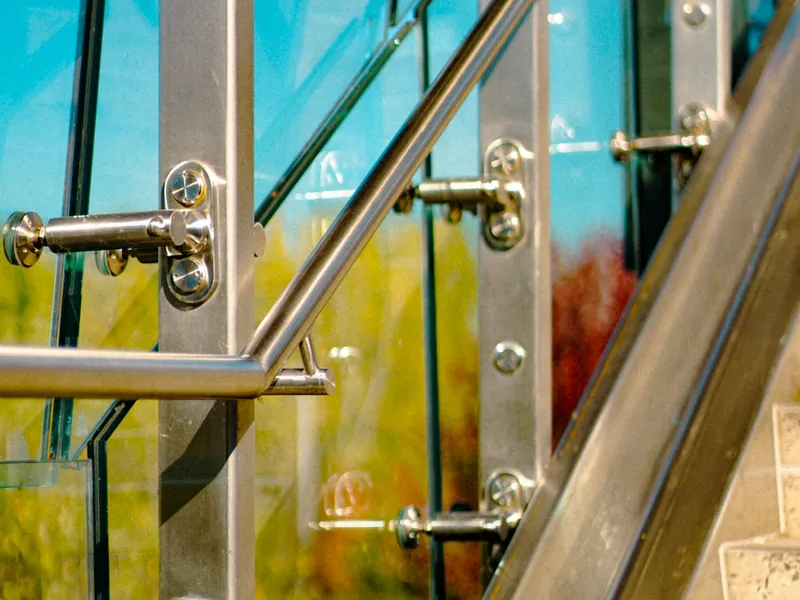
Why horizontal wire rope fails TGD Part K on Irish homes
Homeowners often ask about horizontal stainless wire balustrades for raised sea-view decks or modern staircases because thin cables look minimal and let wind blow straight through. In Ireland, Building Regulations Technical Guidance Document K (2014) sets two strict child-safety tests wherever a drop exceeds 600 mm.
- No ladder effect for children under five. TGD Part K states that guarding must be designed so young children cannot easily climb it. Horizontal tensioned wires spaced every 90 mm to 100 mm give toddlers ready footholds all the way to the top rail.
- Deflection under the 100 mm sphere test. Even if unloaded wires sit 90 mm apart, pressing two flexible cables in opposite directions on a long span can open a gap past 100 mm unless posts sit very close together and tension stays permanently high.
- Heavy end-post pull-in loads. Tensioning 10 or 11 stainless wires tight enough to resist deflection exerts massive horizontal pull on corner posts, bowing lighter tubular uprights and timber deck framing over time.
Price my balustrade
Four quick taps and our per-metre price shows before we ask for a phone number. One local installer rings you, not five.
Stainless steel and glass balustrade, around 9 m total run, in a coastal exposure: €3,700 to €5,050, supplied and fitted.
How the per-metre guide is worked out
The range multiplies typical Irish supply-and-fit balustrade rates per linear metre by the mid-point of your length band, adjusted for indoor 900 mm versus outdoor 1,100 mm laminated glass and Grade 316 coastal stainless hardware. Juliette balconies are priced per door opening rather than per metre. Complex raked stair flights, core drilling into granite or concrete, frosted or tinted glass and flat-roof waterproofing are confirmed on site. Ask whether VAT is charged at 13.5% or 23%. Only an installer who laser-measures the substrate gives a binding quote.
Wire rope compared with compliant glass systems
Part K climbability
- Tensioned wire rope
- Horizontal fails domestic sign-off; only tight vertical cables pass
- Stainless post & glass
- Passes automatically (smooth vertical glass face)
- Frameless glass channel
- Passes automatically (unbroken vertical glass)
Wind shelter on deck
- Tensioned wire rope
- Zero windbreak; breezes blow straight through seating
- Stainless post & glass
- Blocks low-level crosswinds cleanly
- Frameless glass channel
- Full clear windbreak across patios and terraces
Coastal salt upkeep
- Tensioned wire rope
- Stranded wire & turnbuckle threads trap sea salt tightly
- Stainless post & glass
- 316 posts & clamps rinse clean easily
- Frameless glass channel
- Anodised shoe & glass have minimal salt traps
Verified fitted guide
- Tensioned wire rope
- Quote-specific (no standard compliant residential band)
- Stainless post & glass
- €350 to €480/m (+€60 to €80/m coastal)
- Frameless glass channel
- €450 to €650/m (+€60 to €80/m coastal)
Because horizontal wire is routinely rejected by Irish Assigned Certifiers on new builds and extensions, solid toughened or laminated glazing remains the compliant default. Review full statutory details in balustrade building regulations and TGD Part K heights and loads.
Where vertical wires or low-cost glass make sense
If you want the lightest possible visual profile without the full budget of a frameless laminated channel, two compliant routes avoid Part K rejection:
- Grade 316 post-and-clamp glass (€350 to €480/m fitted). Uses slim 10–12 mm EN 12150 toughened panels between marine stainless uprights with a continuous top rail, passing Part K climbability and 100 mm sphere tests outright while acting as a patio windbreak.
- Raised patio spigots or deck glass (€350 to €620/m fitted). Keeps deck edges open to sea or mountain views with a 50 mm leaf sweep below the pane and zero climbable rungs.
- Vertical-only marine 316 cables (strictly non-climbable). Where an architect specifically details wire indoors or on a non-domestic feature, running cables strictly vertically between rigid top and bottom structural rails removes horizontal footholds, though tensioned verticals still need close spacing so pairs cannot part past 100 mm.
Compare outdoor coastal options in 304 vs 316 marine stainless and deck and patio glass balustrades.
Related balustrade guides
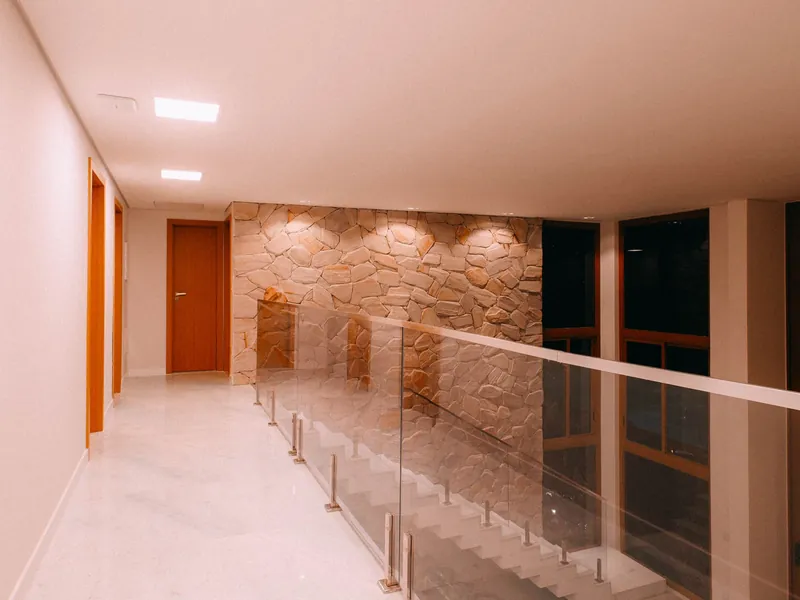 15 mm vs 17.5 mm vs 21.5 mm glassToughened EN 12150 versus laminated EN 14449 interlayers.
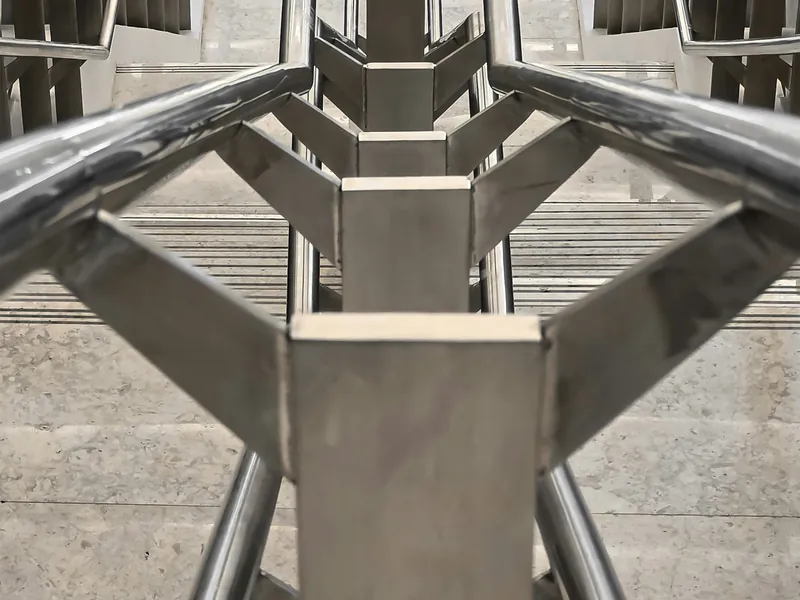 Handrail vs handrail-free rulesWhen BS 6180 demands a cap rail or stiffer laminated glass.
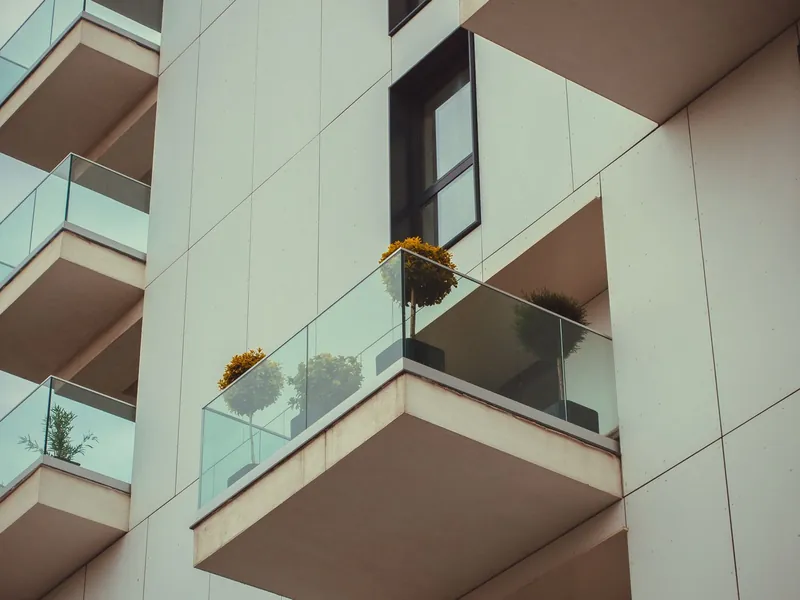 Balcony balustrades1,100 mm external guards, wind loads and fascia fixing.
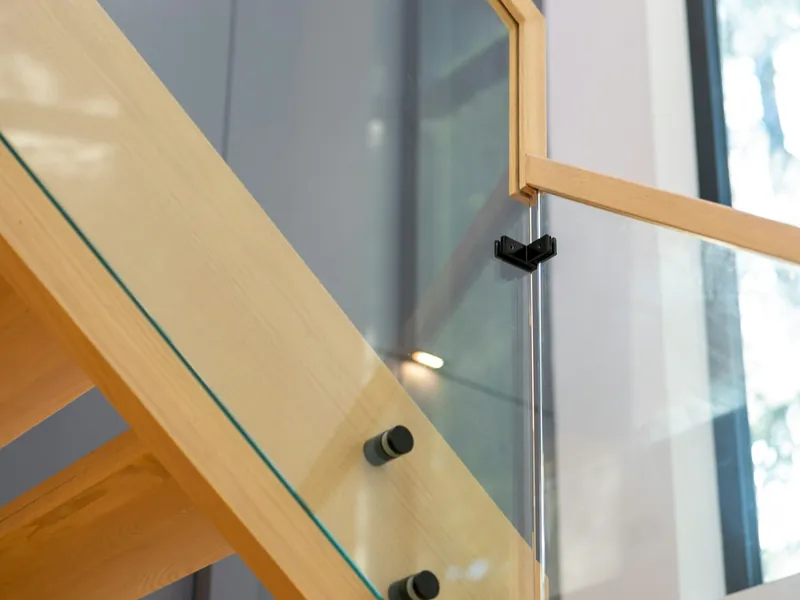 Standoff point-fixed glass50 mm stainless side buttons anchored into stringers or slabs.
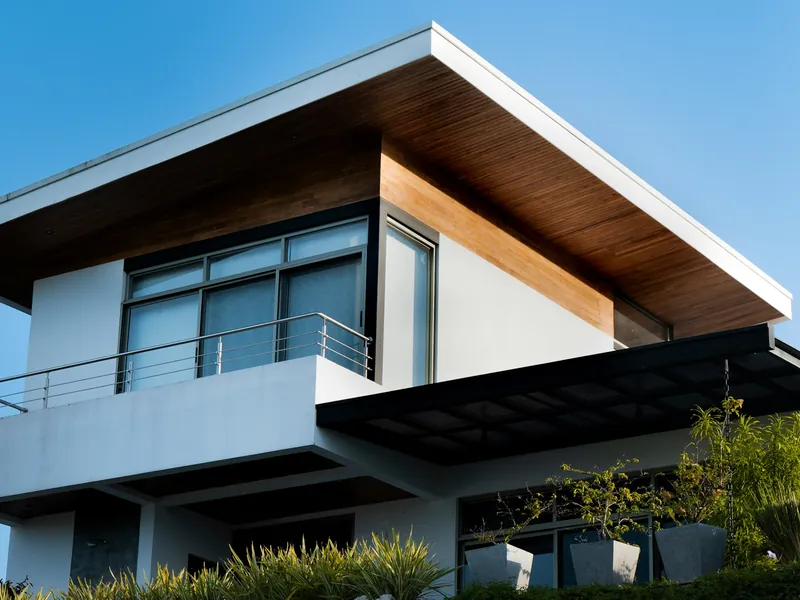 Waterproofing balcony channelsDetailing EPDM, felt and upstands so anchor bolts never leak.
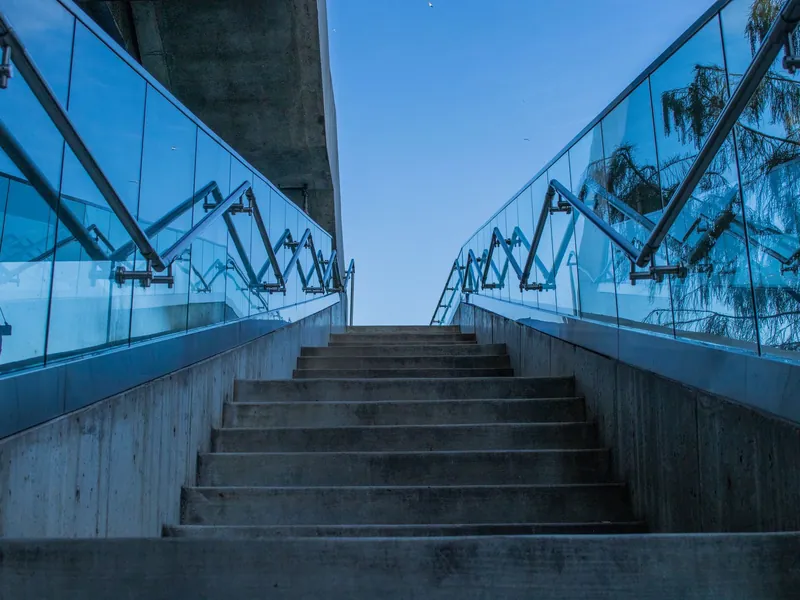 Balustrade cost per metreFull Irish per-metre and Juliette balcony pricing breakdown.
Wire rope vs glass questions
Are horizontal wire-rope balustrades legal on Irish house balconies?
Where a drop exceeds 600 mm and children have access, horizontal tensioned wires generally fail TGD Part K's non-climbable requirement and are routinely flagged by Assigned Certifiers and building surveyors.
Do stainless wire cables rust faster than glass clamps near the Irish coast?
Yes. Multi-strand 7x7 or 1x19 stainless wire and threaded turnbuckles hold microscopic salt moisture inside the cable lay, causing crevice corrosion faster than smooth solid Grade 316 glass clamps.
What is the lowest-cost Part K compliant glass alternative to wire rope?
A Grade 316 stainless steel post-and-clamp glass balustrade with 10–12 mm toughened glass and a continuous top rail starts at €350 to €480/m supplied and fitted in Ireland.
Can horizontal wires be used on a low patio under 600 mm high?
Drops of 600 mm or less do not legally require guarding under TGD Part K, though most Irish homeowners still choose 12–15 mm toughened glass on low patios because it shields outdoor furniture from wind.
All balustrade pages and technical guides
Balustrade systems
Engineering & specs
- TGD Part K heights & loads
- 15 mm vs 17.5 mm vs 21.5 mm glass
- 304 vs 316 marine stainless
- Handrail vs handrail-free rules
- Waterproofing balcony channels
- Frosted & tinted privacy glass
- VAT & installation lead times
- Measuring your balustrade run
- Frameless vs posted glass
- Wire rope vs glass
- Mezzanine & landing glass
Check your balustrade cost per metre before a site visit
Select the glass system, approximate run length and indoor or coastal exposure. When you want a measured quote, your outline goes to a single balustrade installer in your county.